


How does vitrified polyolefin cable material achieve a perfect balance between fire resistance and safety?
Release Time : 2026-05-07
In modern buildings and industrial facilities, the safety and fire resistance of cables are crucial factors in ensuring facility operation and personnel safety. Vitrified polyolefin cable material, especially ceramicized polyolefin cable material, has become an important choice in the field of fire-resistant cables due to its superior fire resistance, fire protection, and stability. This type of high-performance material not only inherits the environmental advantages of traditional low-smoke halogen-free cable materials but also achieves excellent heat insulation and fire protection effects through innovative technologies, providing reliable protection for cable safety.
The core advantage of vitrified polyolefin cable material lies in its outstanding fire resistance. In a fire environment, the material can rapidly form a complete and dense ceramicized shell that will not melt or drip, maintaining structural integrity even under high-temperature flames. This characteristic ensures that the cable continues to conduct electricity during a fire, providing valuable escape and rescue time for critical buildings and facilities. Its excellent fire resistance makes vitrified polyolefin cable material an ideal choice for fire-resistant cables, meeting the high standards of safety required in modern buildings and industries.
Fire resistance and heat insulation are among the significant advantages of vitrified polyolefin cable material. The ceramicized outer shell effectively insulates against flame heat, reducing the risk of damage to the internal conductors and insulation layers from high temperatures. Under flame conditions, the material forms a dense outer shell, enhancing both the cable's mechanical strength and providing stable fire protection. This combination of fire resistance and heat insulation allows the material to maintain cable integrity in fire environments, improving the overall safety of the facility.
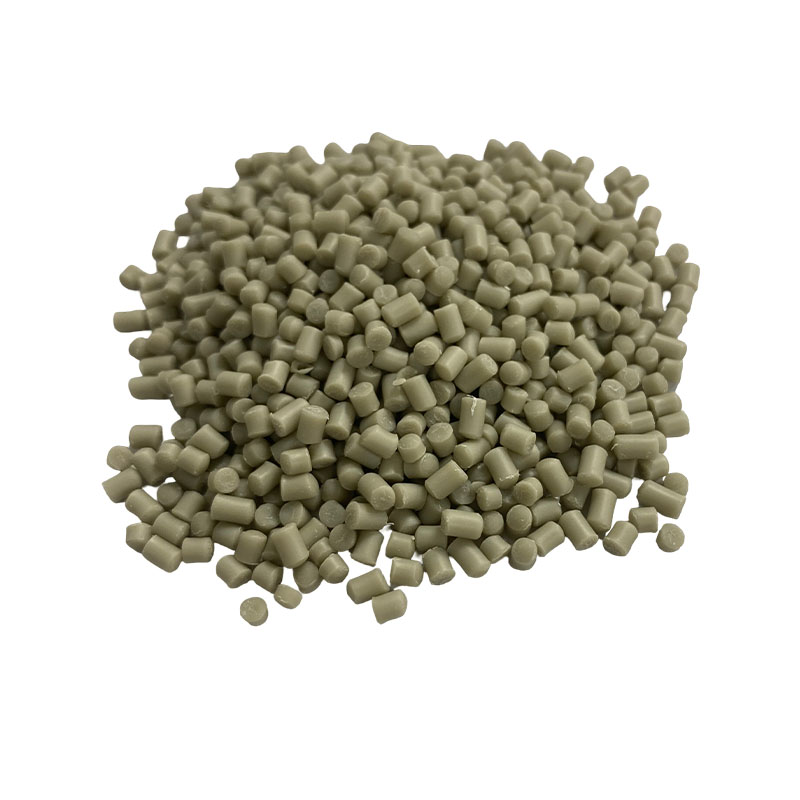
Vitrified polyolefin cable material also excels in processing and performance stability. The material is thoroughly mixed and compressed in an internal mixer, then plasticized and extruded using a twin-screw extruder, ensuring uniform dispersion of components and stable performance. This uniform dispersion not only ensures consistent mechanical and fire-resistant properties but also improves production efficiency and processing reliability. Advanced processing technology guarantees high-quality and long-term reliability of the cable material, providing a solid foundation for cable manufacturing.
The ceramicization property is a key characteristic of this material. Under high-temperature conditions, the material naturally forms a hard and dense ceramicized layer. This layer not only enhances the surface hardness of the cable but also provides excellent wear resistance and resistance to mechanical impact. The high hardness and abrasion resistance of vitrified polyolefin cable material ensure that the cable is not easily damaged during installation and use, while enhancing its long-term reliability. This high hardness and dense structure allows vitrified polyolefin cable material to maintain excellent performance even in complex environments, meeting the diverse needs of industrial and building applications.
The combination of environmental protection and safety performance further highlights the advantages of vitrified polyolefin cable material. The material produces low smoke and halogen-free combustion, reducing the release of harmful gases and ensuring environmental and personnel safety. Simultaneously, the improved fire resistance reduces the risk of fire spread, providing double protection for building safety. This combination of environmental protection and safety makes this material irreplaceable in modern building cable design, balancing functionality and sustainability.
Vitrified polyolefin cable material has a wide range of applications, suitable for various fire-resistant and fire-resistant building projects, including high-rise buildings, underground facilities, industrial plants, and critical infrastructure. The material's high performance and reliability ensure long-term stable operation of the cable in important systems, providing robust protection for power supply, communication systems, and safety facilities. Its versatility and high reliability meet different engineering needs, enabling building and industrial projects to achieve optimal safety and efficiency.
Overall, vitrified polyolefin cable material, with its superior fire resistance, fire insulation, processing stability, vitrification and density, high hardness, and environmental safety, has become a crucial supporting material in the fire-resistant cable industry. It not only ensures that cables maintain conductivity and structural integrity in fire environments but also provides reliable protection for the safety of modern buildings and industrial facilities. The perfect combination of material properties and processing technology gives vitrified polyolefin cable material a leading advantage in the fields of fire resistance and safety.
Vitrified polyolefin cable material, with its comprehensive performance, elevates the fire resistance, safety, and reliability of cables to new heights. Whether in high-rise buildings, industrial plants, or critical infrastructure, it provides stable and reliable fire protection. Through advanced material design and precision processing, vitrified polyolefin cable material achieves a perfect combination of fire resistance and safety performance, providing solid protection for modern building and industrial power systems.
The core advantage of vitrified polyolefin cable material lies in its outstanding fire resistance. In a fire environment, the material can rapidly form a complete and dense ceramicized shell that will not melt or drip, maintaining structural integrity even under high-temperature flames. This characteristic ensures that the cable continues to conduct electricity during a fire, providing valuable escape and rescue time for critical buildings and facilities. Its excellent fire resistance makes vitrified polyolefin cable material an ideal choice for fire-resistant cables, meeting the high standards of safety required in modern buildings and industries.
Fire resistance and heat insulation are among the significant advantages of vitrified polyolefin cable material. The ceramicized outer shell effectively insulates against flame heat, reducing the risk of damage to the internal conductors and insulation layers from high temperatures. Under flame conditions, the material forms a dense outer shell, enhancing both the cable's mechanical strength and providing stable fire protection. This combination of fire resistance and heat insulation allows the material to maintain cable integrity in fire environments, improving the overall safety of the facility.
Vitrified polyolefin cable material also excels in processing and performance stability. The material is thoroughly mixed and compressed in an internal mixer, then plasticized and extruded using a twin-screw extruder, ensuring uniform dispersion of components and stable performance. This uniform dispersion not only ensures consistent mechanical and fire-resistant properties but also improves production efficiency and processing reliability. Advanced processing technology guarantees high-quality and long-term reliability of the cable material, providing a solid foundation for cable manufacturing.
The ceramicization property is a key characteristic of this material. Under high-temperature conditions, the material naturally forms a hard and dense ceramicized layer. This layer not only enhances the surface hardness of the cable but also provides excellent wear resistance and resistance to mechanical impact. The high hardness and abrasion resistance of vitrified polyolefin cable material ensure that the cable is not easily damaged during installation and use, while enhancing its long-term reliability. This high hardness and dense structure allows vitrified polyolefin cable material to maintain excellent performance even in complex environments, meeting the diverse needs of industrial and building applications.
The combination of environmental protection and safety performance further highlights the advantages of vitrified polyolefin cable material. The material produces low smoke and halogen-free combustion, reducing the release of harmful gases and ensuring environmental and personnel safety. Simultaneously, the improved fire resistance reduces the risk of fire spread, providing double protection for building safety. This combination of environmental protection and safety makes this material irreplaceable in modern building cable design, balancing functionality and sustainability.
Vitrified polyolefin cable material has a wide range of applications, suitable for various fire-resistant and fire-resistant building projects, including high-rise buildings, underground facilities, industrial plants, and critical infrastructure. The material's high performance and reliability ensure long-term stable operation of the cable in important systems, providing robust protection for power supply, communication systems, and safety facilities. Its versatility and high reliability meet different engineering needs, enabling building and industrial projects to achieve optimal safety and efficiency.
Overall, vitrified polyolefin cable material, with its superior fire resistance, fire insulation, processing stability, vitrification and density, high hardness, and environmental safety, has become a crucial supporting material in the fire-resistant cable industry. It not only ensures that cables maintain conductivity and structural integrity in fire environments but also provides reliable protection for the safety of modern buildings and industrial facilities. The perfect combination of material properties and processing technology gives vitrified polyolefin cable material a leading advantage in the fields of fire resistance and safety.
Vitrified polyolefin cable material, with its comprehensive performance, elevates the fire resistance, safety, and reliability of cables to new heights. Whether in high-rise buildings, industrial plants, or critical infrastructure, it provides stable and reliable fire protection. Through advanced material design and precision processing, vitrified polyolefin cable material achieves a perfect combination of fire resistance and safety performance, providing solid protection for modern building and industrial power systems.