


How does thermoplastic low-smoke halogen-free flame retardant cable material build a strong safety barrier for cables?
Release Time : 2026-03-23
In modern urban complexes and complex industrial environments, cables, like the vascular network of the human body, continuously transport energy and information. However, in the event of a fire, the dense smoke and toxic, corrosive gases produced by traditional burning cables are often more deadly than the flames themselves. The emergence of thermoplastic low-smoke halogen-free flame retardant cable material has completely changed this passive situation. With its superior environmental characteristics, excellent flame retardant properties, and outstanding processing performance, it has become a core cornerstone for building safety barriers in the power, communication, marine, and control fields.
Safety is the primary mission of this material, and its core indicators lie in its extreme flame retardancy and low-smoke, non-toxic properties. This material is specifically designed for harsh environments with temperatures up to 90°C, and its oxygen index is over 32. This means that it requires an extremely high concentration of oxygen in the air to sustain combustion, thus enabling it to quickly self-extinguish after the fire source is removed, effectively preventing the spread of fire. More importantly, the material formula completely eliminates halogen elements, ensuring that it will not release highly toxic and corrosive gases such as hydrogen chloride, nor produce dense black smoke, even under extreme high-temperature combustion conditions. In densely populated subway stations, high-rise buildings, or enclosed ship cabins, this characteristic buys precious golden time for escape and rescue, greatly reducing the risk of secondary disasters and truly realizing the safety concept of prioritizing life.
Superior mechanical properties and crack resistance endow the cable with a long service life and high reliability. Cables often need to withstand bending, tension, and compression during installation, and face thermal expansion and contraction stresses due to temperature changes during long-term operation. Thermoplastic low-smoke halogen-free flame retardant cable material, through scientific formula design, possesses excellent flexibility and tensile strength, allowing it to tightly adhere to the core and provide robust physical protection. Its outstanding crack resistance ensures that the sheath will not crack at any stage after installation, effectively preventing the intrusion of moisture, humidity, and chemical media, and avoiding short-circuit faults caused by insulation damage. Whether used in marine cables operating under high-pressure conditions in the deep sea or in frequently moved control cables, this material maintains its structural integrity, ensuring uninterrupted power transmission.
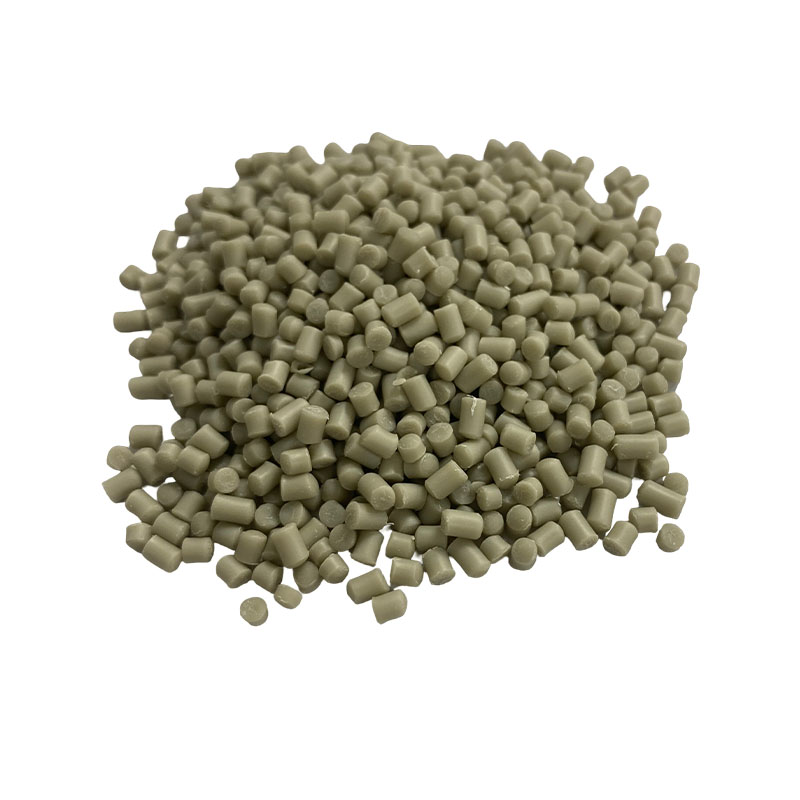
Advanced manufacturing processes are key to guaranteeing stable product performance and a flawless surface. The material undergoes efficient mixing and compression using an internal mixer during production, followed by refinement through a twin-screw plasticizing extrusion granulation process. The powerful shearing and dispersing capabilities of the twin-screw extruder ensure that the flame retardant, filler, and matrix resin are uniformly distributed at the molecular level, fundamentally eliminating the risk of performance fluctuations. This precise processing method results in excellent extrusion stability, manifested on the production line as minimal die residue buildup, extended continuous production time, and significantly improved production efficiency. The final cable wire has a smooth, mirror-like surface, uniform color, and is free of any defects. This not only enhances its aesthetic appeal but also reduces the risk of electric field concentration caused by surface defects, improving electrical safety.
A wide range of applications demonstrates the material's robustness and adaptability. From the main power cables of urban power grids to the communication cables of precision instruments, from the propulsion systems of large ships to industrial automation control networks, thermoplastic low-smoke halogen-free flame retardant cable material is gradually replacing traditional halogen-containing materials and becoming the industry standard. Its excellent processing performance allows it to adapt to high-speed extrusion production lines and meet the manufacturing needs of special-shaped cables, providing great convenience for cable manufacturers.
Thermoplastic low-smoke halogen-free flame retardant cable material is not only a technological advancement but also a fulfillment of its commitment to public safety. It can withstand energy with a temperature limit of 90℃, resist flames with an oxygen index of over 32, and protect lives with its halogen-free and low-smoke properties. In today's pursuit of green and safe development, this material, with its stable performance, excellent processing experience, and comprehensive safety protection, is reshaping the future landscape of the cable industry and contributing an indispensable force to building a safer, cleaner, and more reliable world.
Safety is the primary mission of this material, and its core indicators lie in its extreme flame retardancy and low-smoke, non-toxic properties. This material is specifically designed for harsh environments with temperatures up to 90°C, and its oxygen index is over 32. This means that it requires an extremely high concentration of oxygen in the air to sustain combustion, thus enabling it to quickly self-extinguish after the fire source is removed, effectively preventing the spread of fire. More importantly, the material formula completely eliminates halogen elements, ensuring that it will not release highly toxic and corrosive gases such as hydrogen chloride, nor produce dense black smoke, even under extreme high-temperature combustion conditions. In densely populated subway stations, high-rise buildings, or enclosed ship cabins, this characteristic buys precious golden time for escape and rescue, greatly reducing the risk of secondary disasters and truly realizing the safety concept of prioritizing life.
Superior mechanical properties and crack resistance endow the cable with a long service life and high reliability. Cables often need to withstand bending, tension, and compression during installation, and face thermal expansion and contraction stresses due to temperature changes during long-term operation. Thermoplastic low-smoke halogen-free flame retardant cable material, through scientific formula design, possesses excellent flexibility and tensile strength, allowing it to tightly adhere to the core and provide robust physical protection. Its outstanding crack resistance ensures that the sheath will not crack at any stage after installation, effectively preventing the intrusion of moisture, humidity, and chemical media, and avoiding short-circuit faults caused by insulation damage. Whether used in marine cables operating under high-pressure conditions in the deep sea or in frequently moved control cables, this material maintains its structural integrity, ensuring uninterrupted power transmission.
Advanced manufacturing processes are key to guaranteeing stable product performance and a flawless surface. The material undergoes efficient mixing and compression using an internal mixer during production, followed by refinement through a twin-screw plasticizing extrusion granulation process. The powerful shearing and dispersing capabilities of the twin-screw extruder ensure that the flame retardant, filler, and matrix resin are uniformly distributed at the molecular level, fundamentally eliminating the risk of performance fluctuations. This precise processing method results in excellent extrusion stability, manifested on the production line as minimal die residue buildup, extended continuous production time, and significantly improved production efficiency. The final cable wire has a smooth, mirror-like surface, uniform color, and is free of any defects. This not only enhances its aesthetic appeal but also reduces the risk of electric field concentration caused by surface defects, improving electrical safety.
A wide range of applications demonstrates the material's robustness and adaptability. From the main power cables of urban power grids to the communication cables of precision instruments, from the propulsion systems of large ships to industrial automation control networks, thermoplastic low-smoke halogen-free flame retardant cable material is gradually replacing traditional halogen-containing materials and becoming the industry standard. Its excellent processing performance allows it to adapt to high-speed extrusion production lines and meet the manufacturing needs of special-shaped cables, providing great convenience for cable manufacturers.
Thermoplastic low-smoke halogen-free flame retardant cable material is not only a technological advancement but also a fulfillment of its commitment to public safety. It can withstand energy with a temperature limit of 90℃, resist flames with an oxygen index of over 32, and protect lives with its halogen-free and low-smoke properties. In today's pursuit of green and safe development, this material, with its stable performance, excellent processing experience, and comprehensive safety protection, is reshaping the future landscape of the cable industry and contributing an indispensable force to building a safer, cleaner, and more reliable world.